










Hemoacupuncture for Dogs — Know the Conditions Where it Works Best
If you’ve been exploring natural and holistic options for your dog’s health, you may have come across a technique called hemoacupuncture. While it may sound intimidating at first, this traditional practice has been used in veterinary medicine to help support dogs dealing with a variety of health conditions. Here’s a friendly breakdown of what hemoacupuncture is and where it may be helpful. What Is Hemoacupuncture? Hemoacupuncture is a technique that falls under the umbrella of Traditional Chinese Veterinary Medicine...

4 Reasons You Need to Try Goat Milk for Kittens
Discover four reasons why goat milk for kittens is something you should try today! Kittens are tiny balls of energy and fun. One minute they’re zooming across the house, the next they’re chasing their own tail in a kitty tornado. All that growing, playing, and exploring means they need nutrition that works with their little bodies. And that’s where goat milk comes in. It’s an important addition to kitten food because it’s gentle on tummies, packed with nutrients, and can help support healthy growth. If you...

Does Late-Night Lighting Affect Your Furry Companion
If you love staying up late with the TV blazing or the lights on full blast, you may not realize how nighttime lighting affects dogs and cats — the four-legged members of your household. Just like humans, dogs and cats rely on natural light cycles to regulate their bodies and behaviors. Here’s what every dog and cat parent should know about nighttime lighting. The Body Clock Connection Dogs and cats have an internal body clock, known as the circadian rhythm. This internal clock is largely controlled by light and darkness....
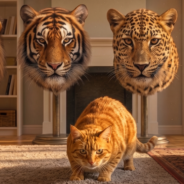
Hardwired Similarities Between Your Furry Feline and the Big Cats in the Wild — And the Takeaway
Have you ever watched your cat stalk a toy mouse across the living room floor and thought, “Wow, that looks like something I’d see on a nature documentary”? That’s because your cat and the big cats of the wild share a surprising amount in common. And understanding those connections can actually help you give your cat a happier, healthier life. Built the Same Way Domestic and wild cats are both obligate carnivores. This means their bodies are designed to run on meat. Their digestive systems, teeth, and even their eyes...

A Reactive Dog Isn’t a Bad Dog. Here’s What Their Behavior Really Means.
Your dog lunges at another dog across the street, barks at a delivery worker, or freezes when a stranger walks by. In the moment, it can look like defiance or bad behavior. But your dog isn’t trying to embarrass you, dominate the sidewalk, or ignore their training. This behavior is reactivity, and it usually means your dog is having a hard time coping with an emotion, feeling, or situation. Let’s look at what’s happening inside the mind of a reactive dog, how you can help in the situation, and what you can do to prevent...

What Every Dog Parent Should Know About Lyme Disease
If you spend time outdoors with your dog — whether hiking through wooded trails or just playing in the backyard — Lyme disease is something worth knowing about. It is one of the most common tick-borne diseases in the United States, and your dog could be at risk. What Is Lyme Disease? Lyme disease is caused by a bacteria called Borrelia burgdorferi. It spreads through the bite of a black-legged tick, also known as a deer tick. These ticks are tiny — sometimes no bigger than a poppy seed — which makes them easy to...

Nocturnal Activity in Cats
If your cat has ever pounced on your feet at 2 a.m., let out a loud meow right next to your ear, or gone on a full hunting mission through your hallway in the middle of the night — you are not alone. This is one of the most common concerns cat parents bring up, and the good news is there are gentle, natural ways to help. Why Do Cats Do This? Cats are naturally crepuscular, meaning they are most active at dawn and dusk. However, indoor cats often shift their energy bursts to nighttime hours. This can happen because of boredom,...

How to Fight Plaque Before It Becomes a Problem for Your Dog
Plaque buildup is one of the most common health issues in dogs, and the good news is that there are steps you can take to slow it down — starting with something as simple as a daily tooth brushing routine. What Is Plaque and Why Does It Matter? Plaque is a sticky, invisible film of bacteria that forms on the surface of your dog’s teeth. Within just 24 hours, minerals from saliva can begin hardening that plaque into tartar — a tough, yellowish buildup that can only be removed by a veterinary professional. Left unchecked,...

Canine Genetic Awareness and Preventative Care
As a dog parent, you want the best for your furry companion. You make sure they eat well, exercise regularly, and visit the veterinarian. But have you thought about what’s written in their DNA? Understanding your dog’s genetic makeup is one of the most powerful tools available for keeping them healthy for years to come. Why Genetics Matter Every dog inherits genes from both parents. These genes don’t just determine coat color or ear shape — they can also reveal the risk for serious health conditions. Some diseases are...
Are They Scratching Too Much? How You Can Help Your Dog
Does it seem like your dog just can’t stop scratching? You’re not alone. Excessive scratching is one of the most common concerns dog owners bring to their veterinarians. While the occasional scratch is totally normal, constant scratching can be a sign that something more is going on. Let’s break it down. What’s Causing All That Scratching? One of the most common reasons dogs scratch excessively is a condition called atopic dermatitis, or “atopy.” This is a skin condition caused by environmental...